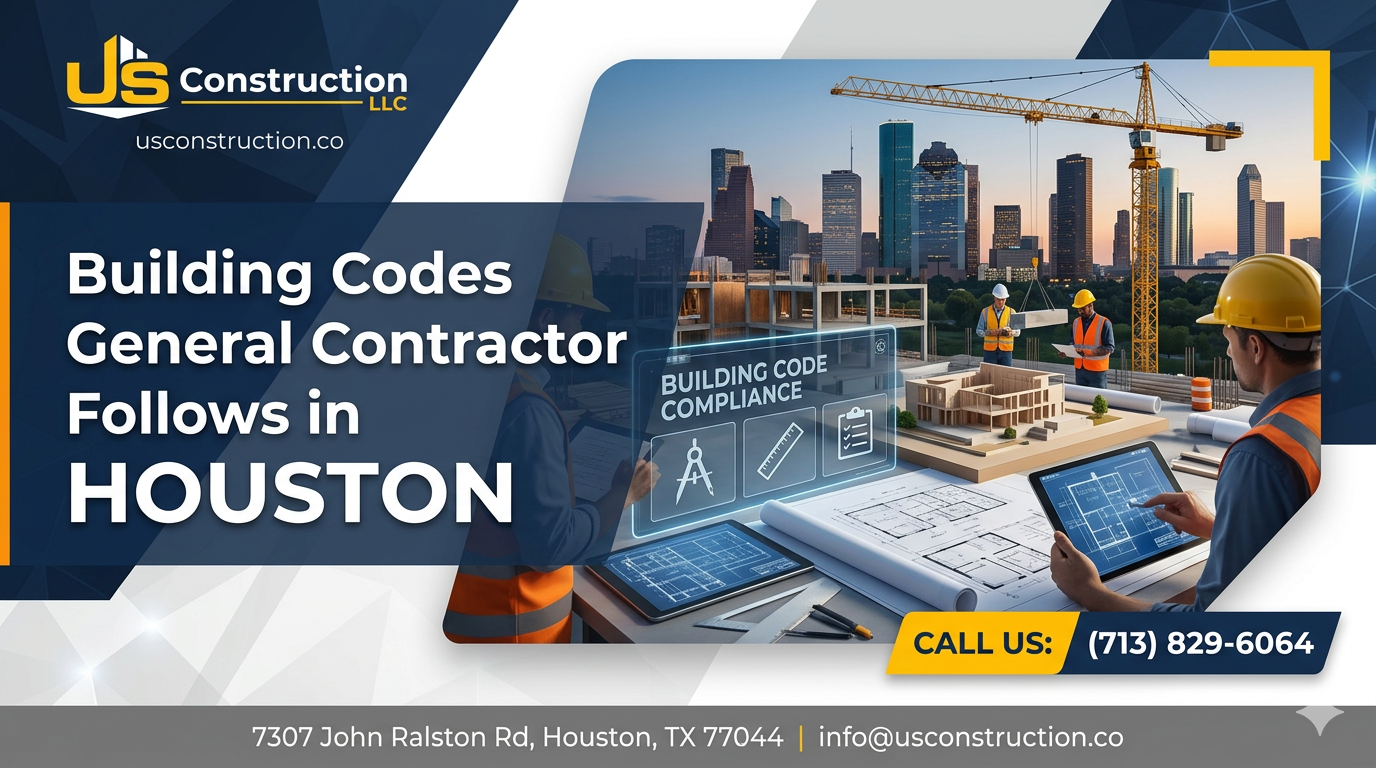
To ensure the building’s strength and durability, the contractors strictly adhere to safety and structural regulations. In this exploration, we discuss the common Houston building codes that the general contractor follows for project safety, legality, and long-term performance.
US Construction LLC works within the framework outlined by the City of Houston. They ensure their operations comply with the International Residential Code (IRC), the International Building Code (IBC), and mechanical standards. Experienced general contractors manage conformity with structural integrity and life-safety systems, and clear permitting and inspections. Following regional construction codes protects against penalties and delays and improves property value.
Common Building Regulations in Houston, Texas
Houston’s building codes are a thorough set of rules intended to guarantee the effectiveness, longevity, and safety. They are equally important for residential and commercial developments. The City of Houston Department of Public Works and Engineering enforces structural, electrical, plumbing, mechanical, and energy systems.
Homeowners, developers, and Houston general contractors must understand these rules to prevent costly infractions and ensure the long-term integrity of their properties. Here is a thorough explanation:
Structural Codes
For the structural stability of residential constructions, experts follow the International Residential Code (IRC) and the International Building Code (IBC). These codes govern:
- Frameworks and foundations
- Walls and frames that can support weight
- Trusses and roofing systems
- Standards for hurricane impact and windstorm resistance
Because of Houston’s vulnerability to flooding, severe rains, and sporadic strong winds, architectural compliance guarantees longevity and security.
Electrical Codes
Local modifications are made to the National Electrical Code (NEC). Among the prerequisites are:
- Appropriate bonding and grounding
- Calculations for load and circuit safety
- Installing outlets, lamps, and appliances safely
- Adherence to wet-area and outdoor installation regulations
These rules guard against electrical malfunctions, fire threats, and resident safety risks.
Plumbing Codes
With some local adjustments, Houston enforces plumbing regulations in accordance with the Uniform Plumbing Code (UPC). Important clauses consist of:
- Appropriate drainage and water distribution system installation
- Preventing backflow
- Standards for efficient water use
- Regulations about stormwater and sewer connections
Leaks, pollution, and expensive repairs are less likely when there is compliance.
Mechanical and HVAC Codes
Mechanical systems must comply with the International Mechanical Code (IMC) and regional energy-efficiency requirements. These include:
- Adequate airflow and ducting
- The size and installation of HVAC systems
- Emission and heating safety systems
- Guidelines for indoor air quality
Local code compliance often incentivizes energy-efficient renovations.
Energy Conservation and Sustainability Codes
Houston implements the International Energy Conservation Code’s (IECC) guidelines, which center on:
- Efficiency of the building insulation
- Windows and doors that use less energy
- Efficiency of water heating, HVAC, and lighting
- The addition of solar and alternative energy sources (where applicable)
These regulations support sustainable building techniques and lower utility bills.
Permit and Inspection Requirements
Permits from the City of Houston are needed for any significant building, renovation, or structural work. Inspections are carried out at crucial points, and contractors are required to provide comprehensive plans for evaluation:
- Inspections of the foundation and framing
- Mechanical, plumbing, and electrical inspections
- The last building inspection before occupancy is approved
Inadequate permit acquisition may result in penalties, delayed projects, and perhaps legal problems.
Local Amendments and Special Considerations
Houston’s climate, soil, and flood zones present special considerations: local ordinances and FEMA’s standards for floodplain building. Developers prepare strategies for mitigating the effects of clay soil foundations. Design requirements for hurricane and windstorm resistance, to address dangers unique to cities, are added to national codes.
Long-term property value, homeowner safety, and lawful construction all depend on adherence to Houston building standards. All structural, mechanical, electrical, plumbing, and energy systems will meet or exceed code requirements when working with a certified general contractor.
Benefits of Complying with Building Codes in Houston
Homeowners can avoid expensive rework, fines, and responsibility while constructing a secure, long-lasting, and marketable property by effectively managing permits, inspections, and municipal amendments. Homeowners, contractors, and real estate speculators can all benefit greatly from Houston’s building codes. Here is a thorough rundown of the advantages:
Safety and Structural Integrity
The purpose of building codes is to shield residents from dangers. Compliance guarantees the robustness of load-bearing buildings and foundations. Ensure the correct plumbing and electrical installations are enabled. Safety during windstorms and fires with a lower chance of mishaps or structural collapse
Legal Protection and Liability Reduction
Residents and subcontractors are legally protected by following the codes, preventing fines or penalties from the City of Houston. It lowers responsibility in the event of mishaps or property damage and ensures adherence to insurance regulations.
Enhanced Property Value
Code-compliant homes are more appealing to purchasers because they adhere to the latest safety and efficiency standards. A Houston general contracting company provides fewer issues with inspections or appraisals. Over time, maintain or raise market value.
Reduced Maintenance Costs
Long-term costs are reduced when code-compliant work is done correctly. Proper installation of systems and structures minimizes wear and failure. Prevents expensive repairs or retrofits that increase resilience to Houston’s climate issues.
Energy Efficiency and Operational Savings
Energy-related regulations guarantee more energy-efficient homes, which reduces utility costs by using adequate lighting, HVAC, and insulation. Encourages environmentally friendly construction methods. Homeowners may be eligible for energy discounts or rebates.
Insurance and Financing Advantages
Code compliance makes things easier, claims and approvals for home insurance. The procedures for mortgages and refinancing are streamlined. Obtaining loan approvals for upcoming remodeling or selling.
Peace of Mind
Homeowners can feel secure and confident about their investment when they know their house satisfies all safety, legal, and quality requirements.
Compliance is a wise commitment to reliability, effectiveness, and sustainability in Houston’s real estate market. It goes beyond simply avoiding fines. Your family and your financial interests are safeguarded by code-compliant construction.
Houston General Contractor Near Me
It is essential for safety, legality, and long-term value that your home improvement or construction project complies with building rules. Join forces with a reliable general contractor in Houston, Texas, who can accurately handle permits, inspections, and all other regulatory obligations.
Call (713) 829-6064 or go to www.usconstruction.co to reach US Construction right now to arrange your consultation and proceed with construction, knowing that every aspect meets Houston’s building requirements.